
What are Cost Saving Option (CSO) Rollers?
PCI® offers an economical Cost Savings Option (CSO) design to match the capacity and life of other brands on the market.
Customers receive PCI’s quality USA production and management systems utilizing principles of lean manufacturing, continuous improvement and employee engagement; however these rollers contain more economical internal seals and rolling elements. Our full line of Load Bearing Rollers is still offered with multiple bearing types- each with its own set of features and benefits within the same dimensional package – including our premium lines featuring ∞Infinity Roller™ Technology.
CSO Track Rollers
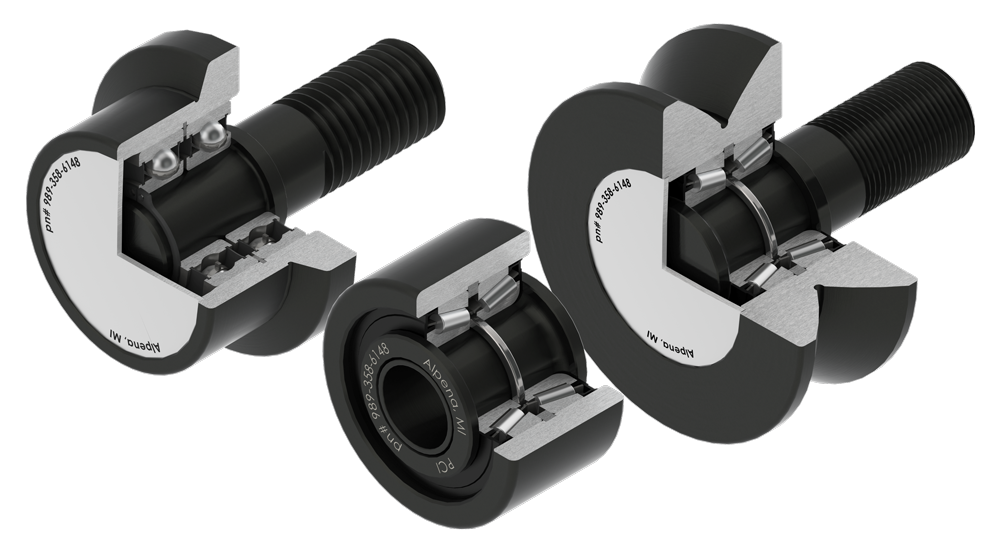
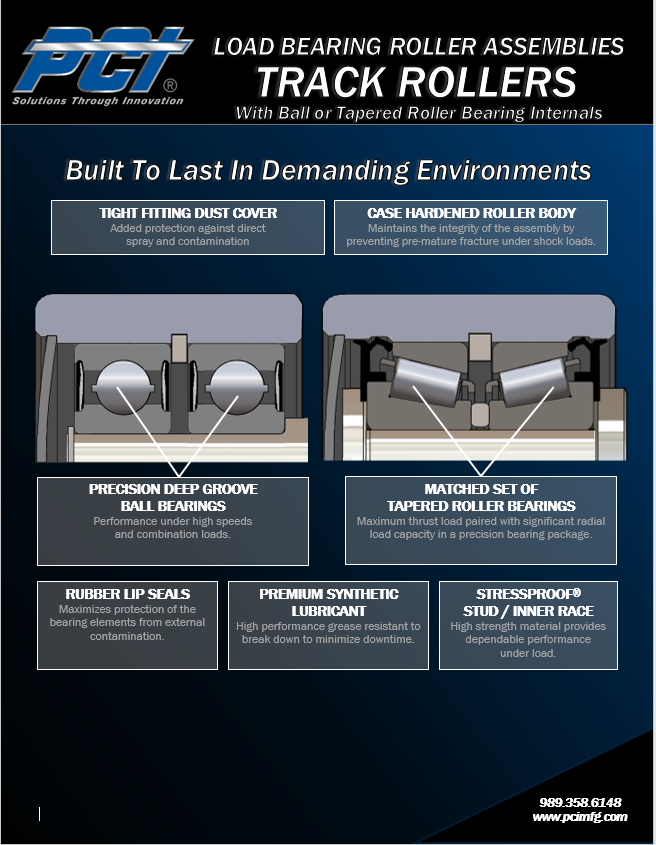
PCI CSO Track Roller assemblies are manufactured with radial ball bearings or tapered roller bearings and are engineered with cost effective internal components. Choose from stud type or yoke type in a variety of body profiles. PCI Track Rollers feature black oxide coating on all surfaces, rugged rubber seals and a steel dust cover to maximize performance in dirty applications.
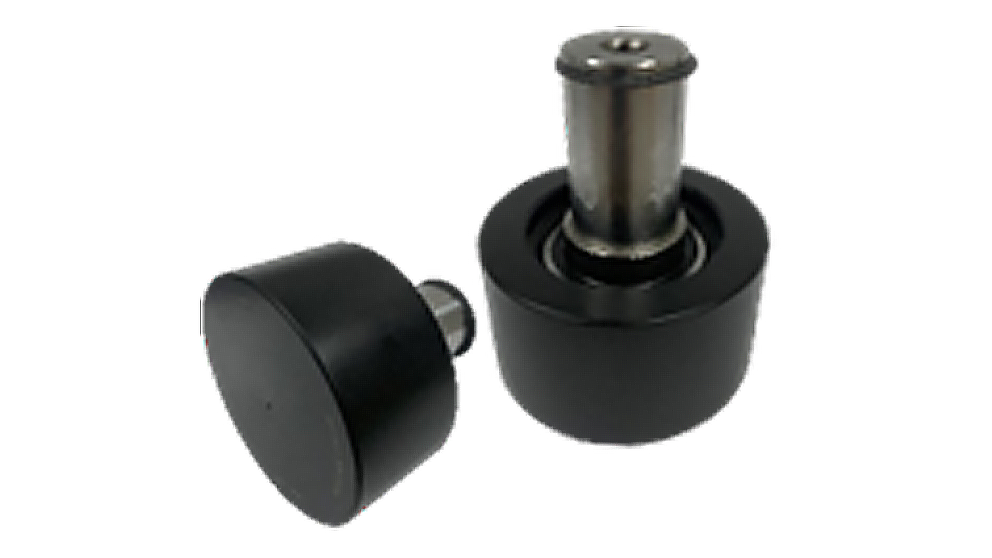
CSO Waste and Refuse Rollers
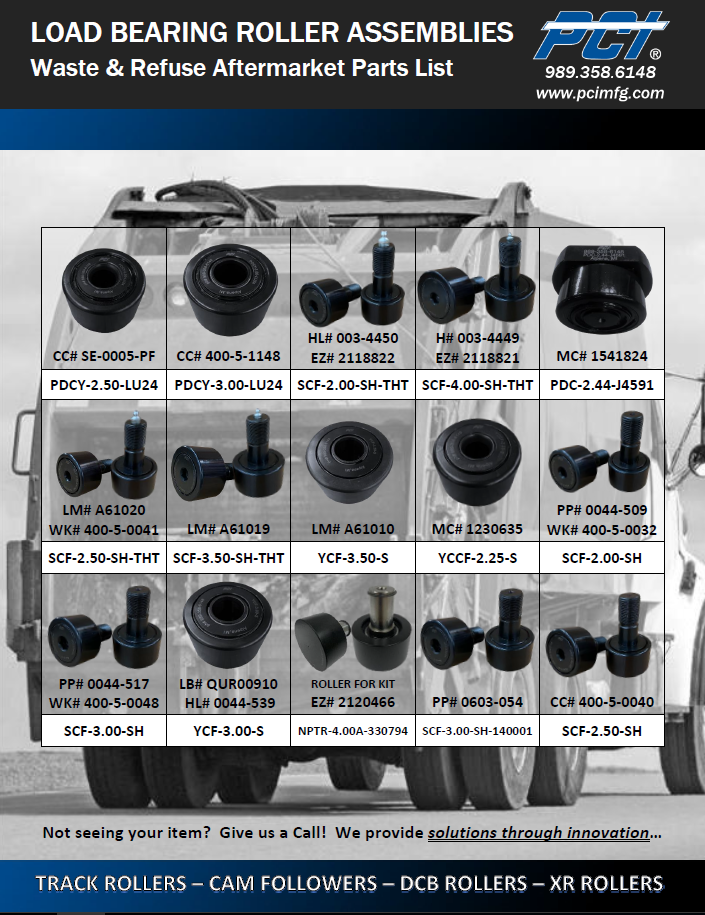
PCI CSO Waste and Refuse Rollers are a drop-in replacement for units found on waste and refuse equipment. Rollers are available in several configurations with stock availability. All units feature black oxide coating on all surfaces and are manufactured in the USA from bearing quality steel.
Frequently Asked Questions (FAQs)
What is a Load Bearing Roller Assembly?
PCI Load Bearing Roller Assembly solutions is a term used to describe (4) different series of rollers. Each series is engineered to diminish costs associated with routine maintenance and replacement cycles and perform in critical applications where decreased contamination and reduced downtime is a must. PCI’s premium lubricants, multifaceted seal designs, and industry-leading bearings form an unbeatable combination providing lower operating temperatures than competitive designs.
- XR Rollers – Ball and Tapered Roller Bearings
- Track Rollers – Ball and Tapered Roller Bearings
- DCB Series – Cylindrical Roller Bearings
- Cam Follower series – Needle Bearings
Each series is manufactured with a variety of body profiles to help address concerns with environment, load, speed, and alignment. Eccentric options provide precision positioning.
What factors Impact Proper Roller Selection?
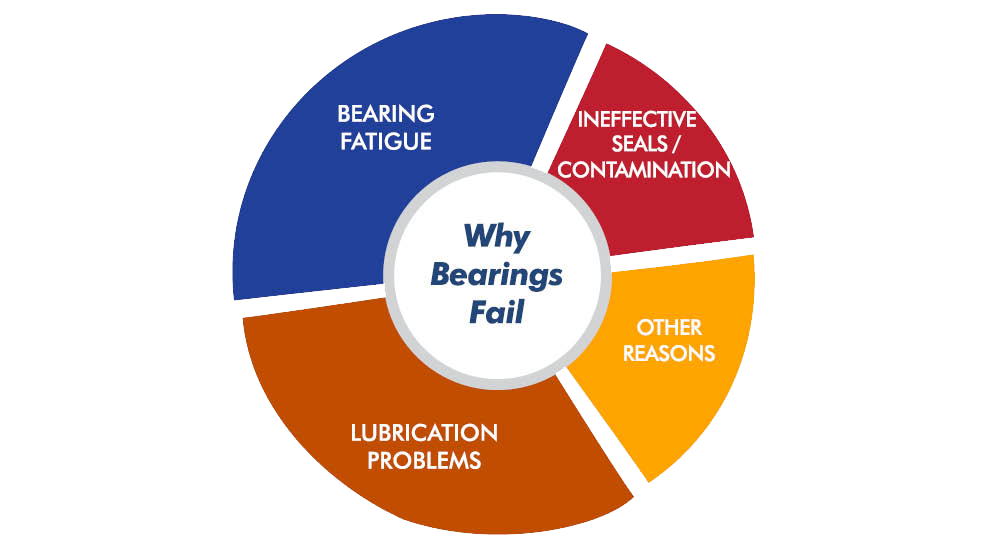
Application factors greatly impact proper selection and functionality of your load bearing roller assembly. Selecting the wrong load bearing roller assembly in haste can lead to premature failure and costly downtime. Gaining an understanding of these factors is the first step in obtaining choices for a solution.
- Environment
- Load
- Speed
- Alignment
- Profile
- Dimensional Constraints
What is the Application Environment?
Environmental conditions can impact the life and performance of load bearing roller assemblies. Bearings won’t operate efficiently and/or may fail prematurely if they are not carefully selected to suit the conditions under which the bearing is running. You can count on PCI as your trusted advisor to help you properly select rollers based on these factors:
- Operating Conditions – load, speed, alignment, temperature
- Contaminants – chemicals, vapor, water, particulate, pressure
- Maintenance, Repair and Return on Investment Factors – lubricant, accessibility, cost, sound/noise, tread wear
What are Application Loads?
Load bearing roller assemblies are designed to support moving (dynamic) loads or stationary (static) loads. Roller load can be communicated using the following terminology:
- Radial – Load applied 90 degrees to the bearing bore or axis of rotation
- Axial / Thrust – Load applied parallel with the bearing bore or axis of rotation
- Combination – Load comprised of both radial and thrust load acting simultaneously, or together, create combination load. Misalignment and roller mounting orientation are often overlooked and is a primary factor in creating combination loads. When calculating total load capacity needed, please be sure to intentionally take dead loads that are relatively constant for an extended time, and live loads that are applied on and off, into consideration.
What are Applied Speeds?
There are two common ways to determine the velocity of a traveling object. Objects traveling in a linear path are measured in distance per unit time, often in feet per minute (FPM) or meters per second (M/sec). Rotational velocity is commonly measured in revolutions per minute (RPM). Because bearing life and capacities use revolutional velocity in their calculations, conversion from linear to revolutional velocity is important.
How Does Bearing Type Impact Speed?
Bearing speed is determined by size, design, and quality. Some bearings can withstand high speeds; however, the choice of a higher speed is often made at the expense of the load. Speed limitations are influenced by seals, lubrication type and delivery mechanism, product materials, and cage design. Generally, the smaller the bearing and the more precise its tolerancing, the higher its speed capability. Caged bearings generally have higher speed ratings than full complement bearings. A precision ground bearing better accommodates speed compared to unground bearings.
What are the Needs for Accurate Guidance or Alignment?
Ideally, the linear velocity of the trolley or carriage assembly and the rotational rate of the bearing remain proportional and aligned (square) to each other. When a differential exists between these two components, misalignment begins to occur, causing premature wear or, in some cases, catastrophic failure. PCI provides analysis of failure modes and wear patterns, and evaluates costs associated with maintenance, replacement cycle, and performance.
How does Roller Selection Impact Guidance or Alignment?
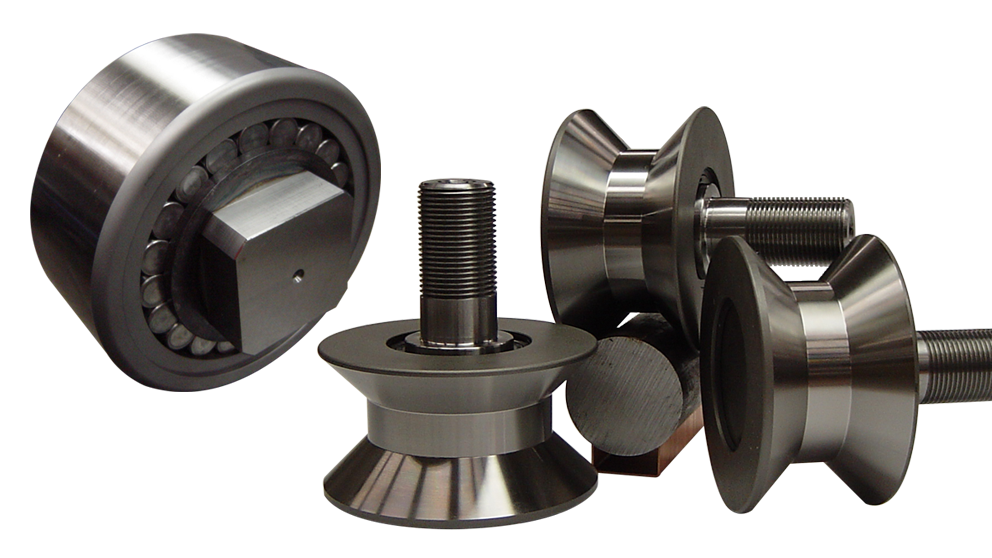
Load bearing roller assemblies facilitate the location of moving loads or the contact surface by allowing for specific movements and by limiting unwanted ones. Rollers that do little to reduce misalignment and friction will create unacceptable magnitudes of heat and wear when used at speeds and conditions most demanding applications require. Roller body profile plays a pivotal role in roller-to-rail location. Crowned profiles provide operational enhancement while Flanged, U-Groove, and V-Groove shoulders provide guidance.
How do Eccentric Options Provide Precision Positioning?
Eccentric adjustment reduces or removes gaps in unfavorable misalignment conditions by providing uniform contact and loading among mounted rollers to improve life.
What are Extreme Duty Solutions?
PCI Extreme Duty Rollers featuring ∞Infinity Roller™ Technology are designed to perform in the most demanding environments. Stainless Steel and Non-Metallic materials can be coupled with extreme temperature resistant components.
What are Industry Solutions?
PCI analyzes failure modes, wear patterns, maintenance, and repair cycles to develop specific industry solutions. Standard designs include drop-in replacement rollers for the lumber & sawmill industry, components for Oil & Gas equipment, recycling, waste & refuse parts, or for wire guide processing.
What if I Don’t See a Roller in the Size I Need?
PCI manufactures special & custom assemblies in all shapes and sizes using a variety of internal bearing configurations. We deliver rollers weeks ahead of the competition and require no piece minimums. Whether it’s dimensional adjustments, or analysis and application guidance to resolve problematic demands…
PCI provides Solutions Through Innovation!
What is Infinity Roller Technology?
PCI Infinity Roller™ Technology delivers robust, high-performance load-bearing solutions engineered for maximum uptime and productivity. We achieve extended service life and increased run time by optimizing bearing component geometry and utilizing superior rolling elements. These precision designs also reduce operating temperatures and improve lubricant life, which helps lower overall maintenance and operating costs. PCI rollers often exceed competitors’ load ratings within the same standard package size. Our diverse offerings, with their unique features, will fit your application needs.
Where can I get the fasteners for the rollers?
Threaded fasteners create non-permanent mountings to retain a Load Bearing Roller Assembly to the mounting rail. They produce the required positive clamping force needed to immobilize the stud or yoke inner race. PCI suggests using threaded fastener sets and discourages use of retaining rings, keeper clips, spring pins, etc. While most fasteners are available from distributors who specialize in industrial use, not all suppliers stock the appropriate size / thread combination. PCI fasteners allow for easy mounting and dismounting and are available for purchase without taking extra steps to source them elsewhere.
General Resources
Parametric Search – Find your solution with our electronic catalog.
Alternate Product Options
Learn why products with PCI ∞ Infinity Roller ™ Technology outlast the competition!
Watch How Crowned V-Groove Geometry Reduces Scrubbing and Rolling Resistance