
What are Ice Eradicator Conveyor Pulleys?

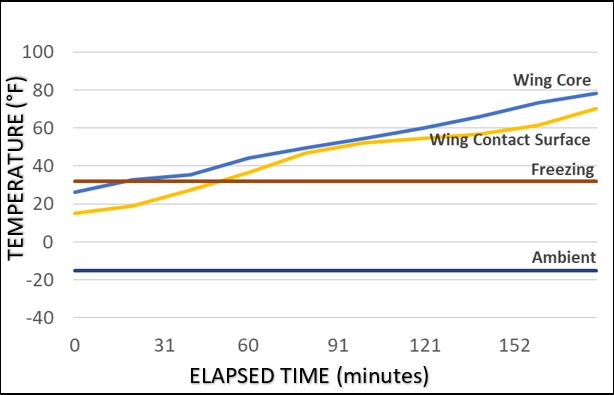
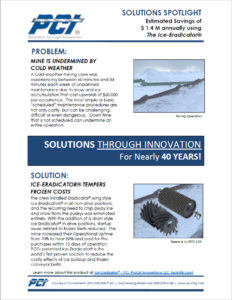
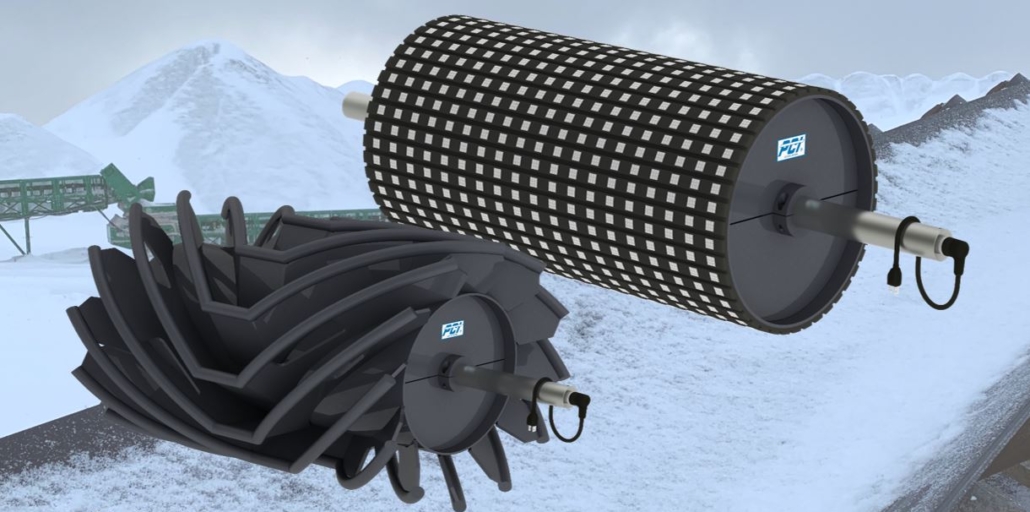
PCI’s patented Ice Eradicator® is the world’s first proven solution to temper the costly effects of frozen conveyor belts. When installed in the head position, a drum style Ice Eradicator® will de-ice and soften the conveyor belt encouraging startup in freezing conditions. PCI’s innovative technology can also be adapted to any Eradicator® or Deflector® wing pulley to discourage problems related to ice buildup in non-drive positions.
Patent # 11,572,234

Cold Weather Performance

The Ice Eradicator reduces belt slip in cold environments through its patented heated core technology. In freezing environments, conveyor belts become rigid, preventing conveyor operation by disrupting the ability of the drive pulley to grip the belt. The Ice Eradicator enhances belt grip in cold temperatures by maintaining an elevated temperature near the pulley’s outer surface thereby heating the belt to discourage belt freeze.

Reduce Safety Hazards

In cold weather months, frozen belts increase the amount of time required to successfully startup a plant operation.  To minimize downtime, direct human intervention at the drive position with tools like propane burners or liquid chemicals are sometimes employed. Many of these methods increase the likelihood of workplace accidents. The Ice Eradicator reduces the safety risk posed by using these unorthodox methods of resolution.

No Direct

Flame

Alternate methods for resolving frozen conveyor belts utilize direct flame to provide the heat necessary for startup. Although effective, use of direct flame at the site can increase the risk of fire or workplace injury. In addition, heating fuel can prove costly during cold weather months. The patented design of the Ice Eradicator eliminates the need for direct flame providing proven performance without the added cost and risk of direct flame.

Simplified Installation

The Ice Eradicator is engineered for easy installation with minimal modification to the existing conveyor structure. Worry free performance at sub-zero temperatures is possible with a single 120V 15Amp power service.
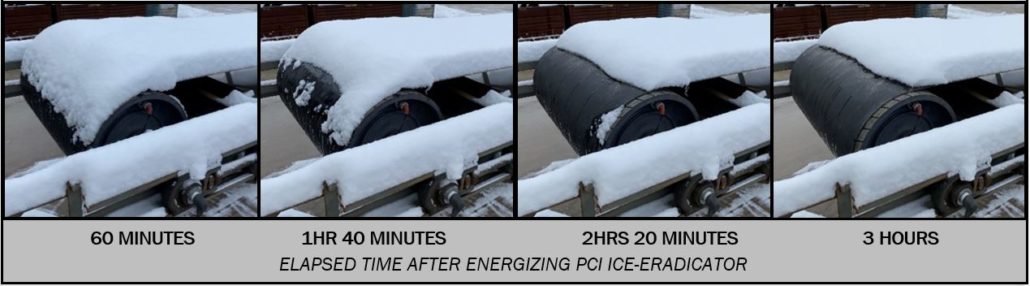
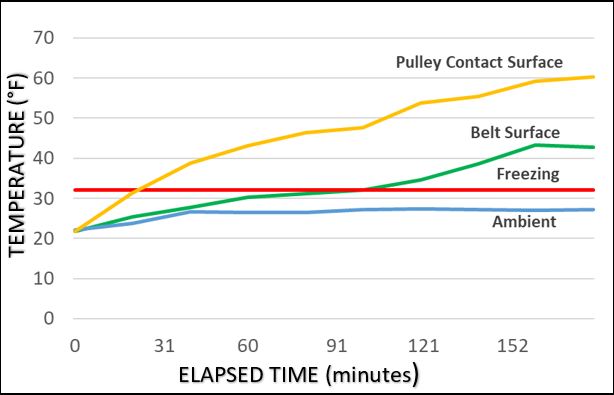
In an environment of 20°F ambient temperature and 5” of fresh snow, PCI’s Ice Eradicator is able to completely melt snow and ice in three hours with a single 120V 15Amp power source.

How does PCI’s Ice Eradicator work?

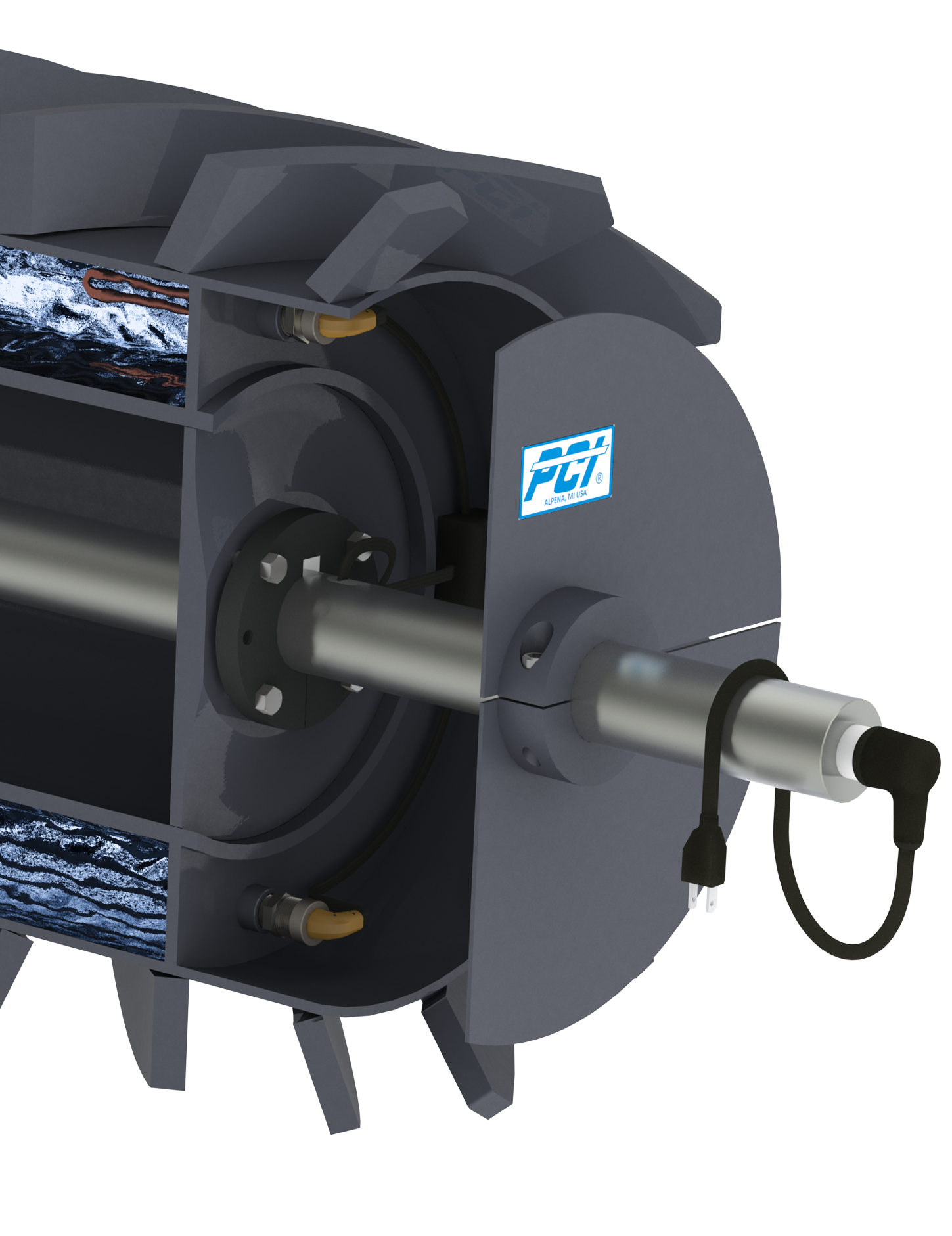
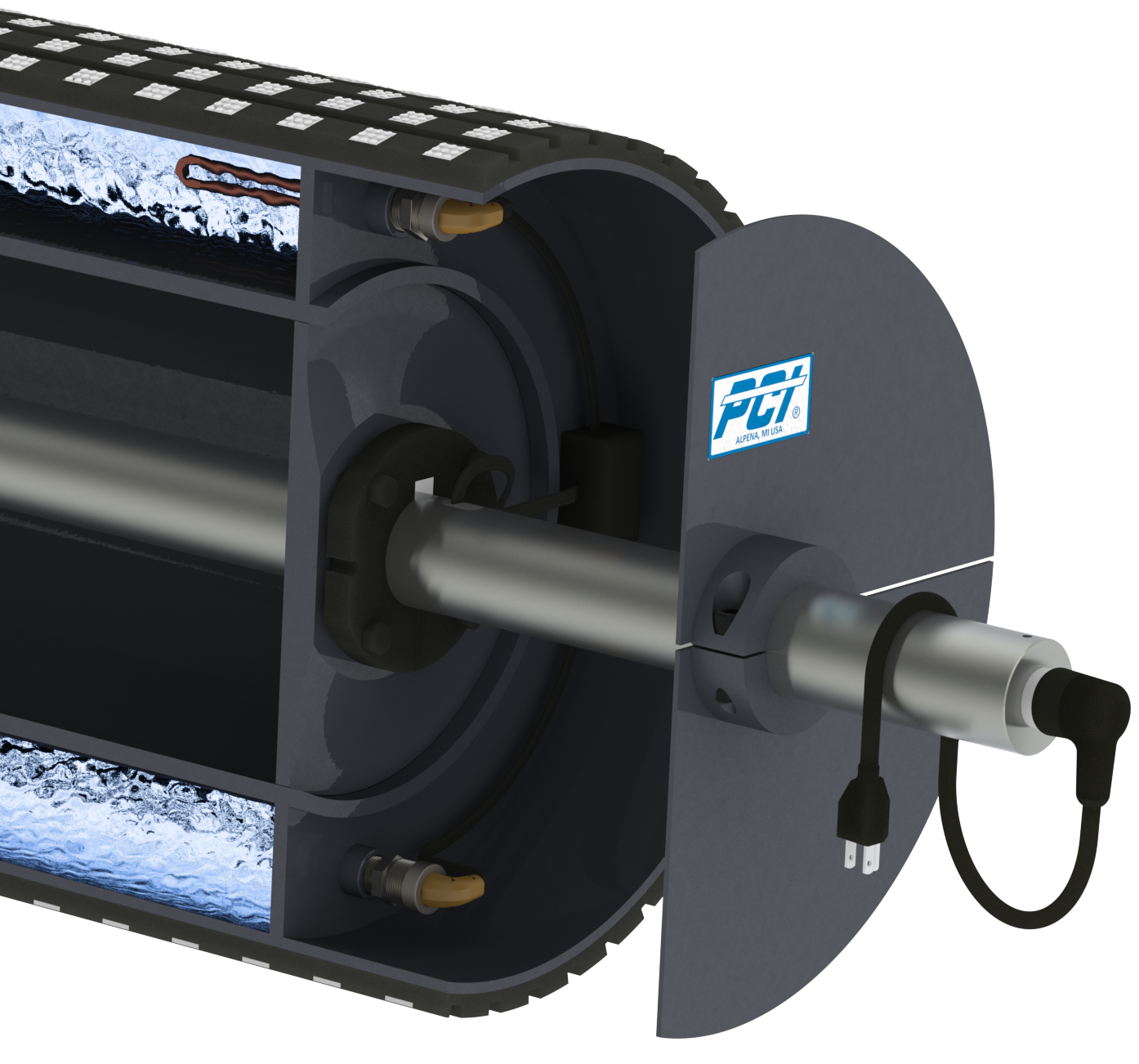
PCI’s patented technology incorporates a slip ring and heating element to heat an environmentally friendly internal liquid solution. With a GFCI protected 120V 15Amp power supply, the Ice Eradicator can be energized just hours prior to conveyor system start-up (harsher environments may require more time). When energized, the surface temperature of the pulley increases at a rate of up 25°F per hour which increases the belt temperature at a rate of up 5°F per hour. By elevating the surface temperature of the pulley, the belt to pulley connection is de-iced and the belt softened increasing the likelihood of successful conveyor start-up. In critical applications and all non-drive positions, the Ice Eradicator may be energized during operation for performance in extreme conditions.
Frequently Asked Questions (FAQs)

While component thicknesses do contribute to overall pulley capacity, shaft diameter plays the primary role in achieving a desired load capacity. In other words, selecting a pulley with thicker components (Mine Duty over Heavy Duty, MC Series over FC Series) won’t necessarily achieve a greater load capacity if the axle is not sized to accommodate the application loads.

PCI can manufacture pulleys with face lengths greater than 14 feet. Pulleys of this length require special consideration to account for shaft deflection. Small diameter pulleys of increased face length commonly utilize fixed stub shafts in place of traditional through shaft designs. Fixed stub shafts decrease the likelihood of end disk fatigue, as a result of shaft deflection. (For additional information, please see PCI Pulley Selection Guide)

The purpose of a hub keyway is to help the transmission of torque from a shaft to the pulley in a drive application.  Hub keyways are utilized on pulleys that are driving a belt. Most often, the pulley and belt are being turned by the shaft which is being powered by a motor, gearbox, or sprocket. The hub keyways provide the bushing another point of contact to help drive the torque from the motor or gearbox.

The pulley that is in a non-drive position, is driven by the belt and not the shaft. When utilizing compression hubs and bushings there is sufficient grip on the shaft from the bushings themselves. A hub keyway is not needed for pulleys that operate in driven (non-drive) positions.

The main difference between these products is the method used to crown the pulley face when a crown profile is specified. FC Series pulleys receive a crown that is formed into the face of the pulley while MCF Series pulleys utilize machining operations to accomplish the profile. Because MC Series pulleys require machining, they are typically constructed from thicker materials as well.

MC Series designates that when a crown is required, the crown is machined into the face of the pulley rather than formed into it. Flat face pulleys and non-crowned surfaces would not necessarily receive machining unless otherwise specified.

The difference between a Heavy Duty and a Mine Duty conveyor pulley is component thickness. The thicker the components used, the greater the series name (heavy, mine, etc.). Applications with impact loads require consideration of component thicknesses for purposes of strength. Applications with loose, bulk materials require consideration to account for abrasion resistance and the increased possibility of point loading between the pulley and belt.

PCI Contoured Integral End Disks provide an even distribution of stress and reduce the risk of end disk fatigue near the hub. While this upgrade yields a higher safety factor for the drum pulley, if shaft size remains unchanged, the two drums achieve a similar load capacity.

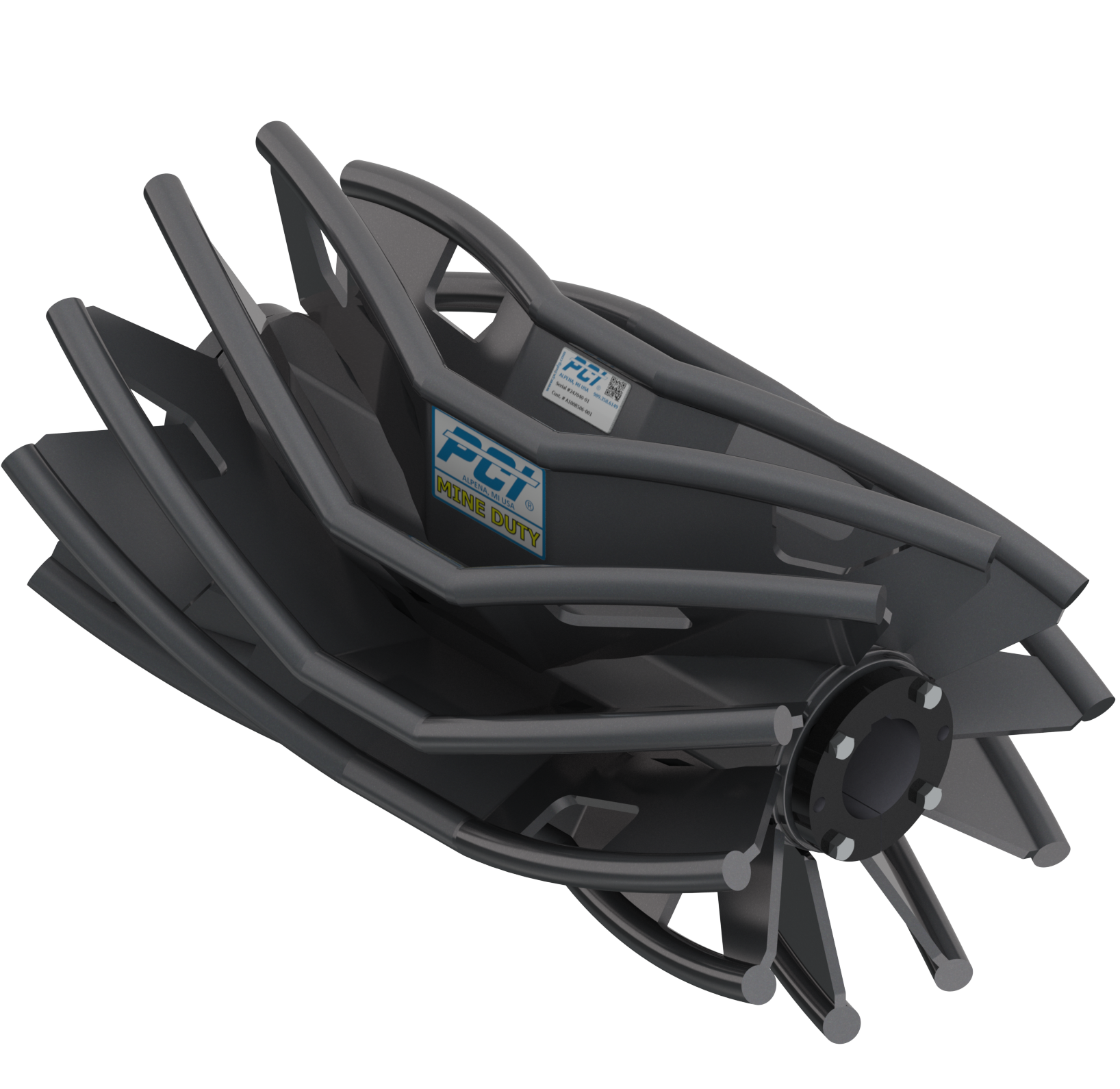
Also known as self-cleaning pulleys, wing pulleys are primarily used on the tail end of bulk handling systems where loose materials tend to reside on the underside of the conveyor belt, causing damage to one or both components.  Wing pulleys incorporate a non-continuous contact surface comprised of individual wings or fins. This construction results in the creation of open voids that allow loose material to fall away from the contact surface. In applications where continuous contact is desired, a spiral style or Eradicator® Wing pulley can be utilized.

While we welcome your custom designs, PCI has designed our Wing Pulleys with standard options for construction choices like gussets and reinforcing rings. PCI Heavy Duty Wing pulleys feature the use of gussets while PCI Mine Duty Wing pulleys feature gussets and reinforcing rings as a standard design detail.

Have questions, need help?

PCI, PROCAL INNOVATIONS LLC.

PCI is a privately held manufacturer
of material handling components founded in 1986
and located in Alpena, Michigan.

PCI Proudly Manufactures in the USA

PCI, PROCAL INNOVATIONS LLC.

P.O. Box 115 Alpena, MI 49707, USA
Toll Free: (800) 323-0966
Load Bearing Roller Assemblies: (989) 358-6148
Conveyor Components: (989) 358-6149
Email PCI

PCI is Committed to Excellence

Sourcing High Quality Products

such as:

© 2021 PCI, ProCal Innovations LLC – Designed by Industrial Image, Inc.